Where is it written that literary women must move to coastalCalifornia (if they don"t already live there), become Episcopaliansand write conversion memoirs? Miles, like recent memoirists DianaButler Bass, Nora Gallagher and Lindsey Crittenden, loves Jesus anddetests the religious right, though she is also critical of "thesappy, Jesus-and-cookies tone of mild-mannered liberalChristianity." Mild-mannered she is not. Converted at age 46 whenshe impulsively walked into a church and received communion for thefirst time, the former war correspondent suddenly understood herlife"s mission: to feed the hungry. What her parish needed, shedecided, was a food pantry—and within a year (and over oppositionfrom some fellow parishioners) she had started one that offeredfree cereal, fruit and vegetables to hundreds of San Francisco"sindigent every Friday. Not willing to turn anyone away, she raisedfunds and helped set up other food pantries in impoverished areas,occasionally "crossing the line from self-righteous do-gooder tocrusading zealot." For Miles, Christianity "wasn"t an argument Icould win, or even resolve. It wasn"t a thesis. It was a mysterythat I was finally willing to swallow." Grittier than manyreligious memoirs, Miles"s story is a perceptive account of onewoman"s wholehearted, activist faith. (Feb. 20)
Copyright © Reed Business Information, a division of ReedElsevier Inc. All rights reserved. --This text refers to an outof print or unavailable edition of this title.
Early one morning, for no earthly reason, Sara Miles, raisedan atheist, wandered into a church, received communion, and foundherself transformed–embracing a faith she’d once scorned. A lesbianleft-wing journalist who’d covered revolutions around the world,Miles didn’t discover a religion that was about angels or goodbehavior or piety; her faith centered on real hunger, real food,and real bodies. Before long, she turned the bread she ate atcommunion into tons of groceries, piled on the church’s altar to begiven away. Within a few years, she and the people she served hadstarted nearly a dozen food pantries in the poorest parts of theircity.
Take This Bread is rich with real-lifeDickensian characters–church ladies, millionaires, schizophrenics,bishops, and thieves–all blown into Miles’s life by the relentlessforce of her newfound calling. Here, in this achingly beautiful,passionate book, is the living communion of Christ.
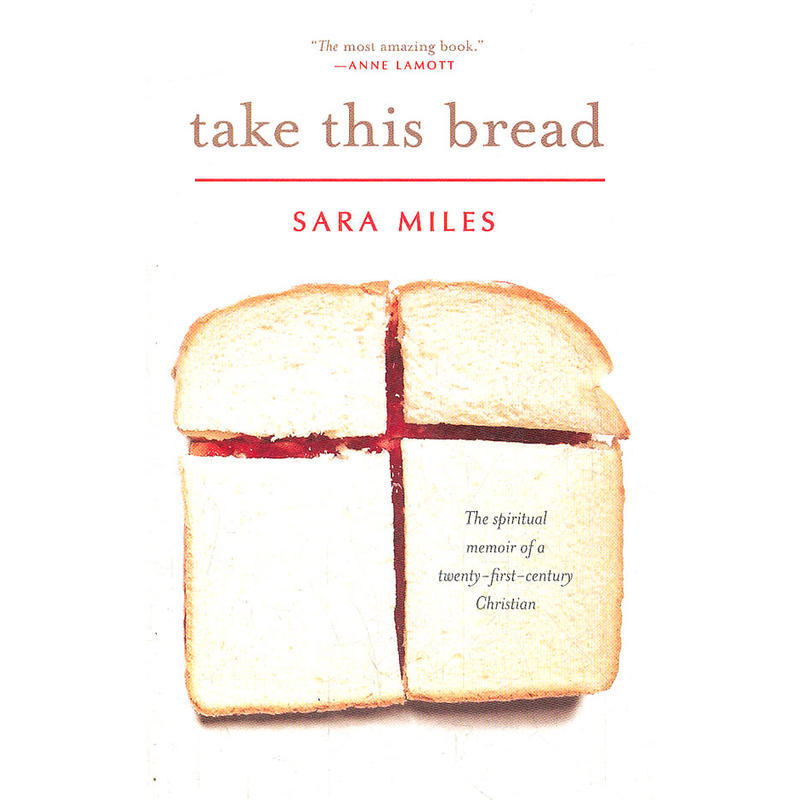
“The most amazing book.”
–Anne Lamott
“Engaging, funny, and highly entertaining . . . Miles comments,often with great insight, on the ugliness that many peopleassociate with a particular brand of Christianity. Why would anythinking person become a Christian? is one of the questions sheaddresses, and her answer is also compelling reading.”
–Booklist
“Powerful . . . This book is a gem [and] will remain with youforever.”
–The Decatur Daily
“What Miles learns about faith, about herself and about the gift ofgiving and receiving graciously are wonderful gifts for thereader.”
–National Public Radio
“[A] joyful memoir . . . advocates big-tent Christianity in thetruest sense . . . a story of finding sustenance and passing iton.”
–National Catholic Reporter
“Rigorously honest, Take This Bread demonstrates howhard–and how necessary–it is to welcome everyone to the table,without exception.”
–San Francisco Chronicle
“Moving, delightful and significant.”
–The Christian Century
Don’t miss the reading group guide in the back of the book.








评论晒单