
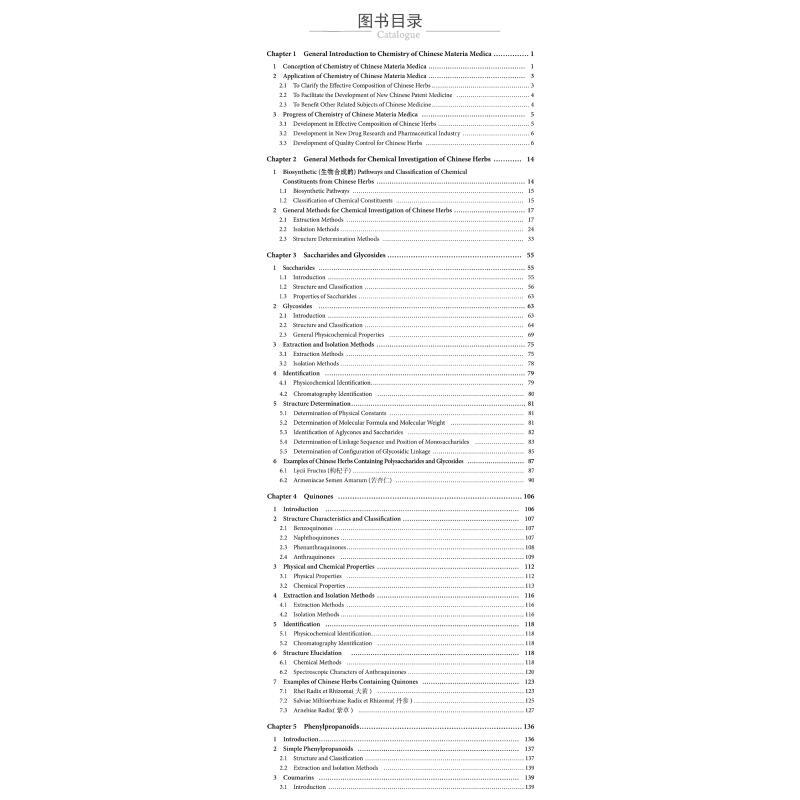
●Chapter 1 General Introduction to Chemistry of Chinese Materia Medica
1 Conception of Chemistry of Chinese Materia Medica
2 Application of Chemistry of Chinese Materia Medica
2.1 To Clarify the Effective Composition of Chinese Herbs
2.2 To Facilitate the Development of New Chinese Patent Medicine
2.3 To Benefit Other Related Subjects of Chinese Medicine
3 Progress of Chemistry of Chinese Materia Medica
3.1 Development in Effective Composition of Chinese Herbs
3.2 Development in New Drug Research and Pharmaceutical Industry
3.3 Development of Quality Control for Chinese Herbs
Chapter 2 GeneraIMethods for Chemical Investigation of Chinese Herbs
1 Biosynthetic (生物合成的) Pathways and Classification of Chemical Constituents from Chinese Herbs
1.1 Biosynthetic Pathways
1.2 Classification of Chemical Constituents
2 General Methods for Chemical Investigation of Chinese Herbs
2.1 Extraction Methods
2.2 Isolation Methods
2.3 Structure Determination Methods
Chapter 3 Saccharides and Glycosides
1 Saccharides
1.1 Introduction
1.2 Structure and Classification
1.3 Properties of Saccharides
2 Glycosides
2.1 Introduction
2.2 Structure and Classification
2.3 General Physicochemical Properties
3 Extraction and isolation Methods
3.1 Extraction Methods
3.2 Isolation Methods
4 Identification
4.1 Physicochemical Identification
4.2 Chromatography Identification
5 Structure Determination
5.1 Determination of Physical Constants
5.2 Determination of Molecular Formula and Molecular Weight
5.3 Identification of Aglycones and Saccharides
5.4 Determination of Linkage Sequence and Position of Monosaccharides
5.5 Determination of Configuration of Glycosidic Linkage
6 Examples of Chinese Herbs Containing Polysaccharides and Glycosides
6.1 Lycii Fructus (枸杞子)
6.2 Armeniacae Semen Amarum (苦杏仁)
……
Chapter 4 Quinones
Chapter 5 Phenylpropanoids
Chapter 6 Flavonoids
Chapter 7 Tannins
Chapter 8 Alkaloids
Chapter 9 Steroids
Chapter 10 Terpenoids and Volatile Oils
Chapter 11 Saponins
Chapter 12 Other Constituents
岗位对接
目标检测答案
参考文献

内容简介

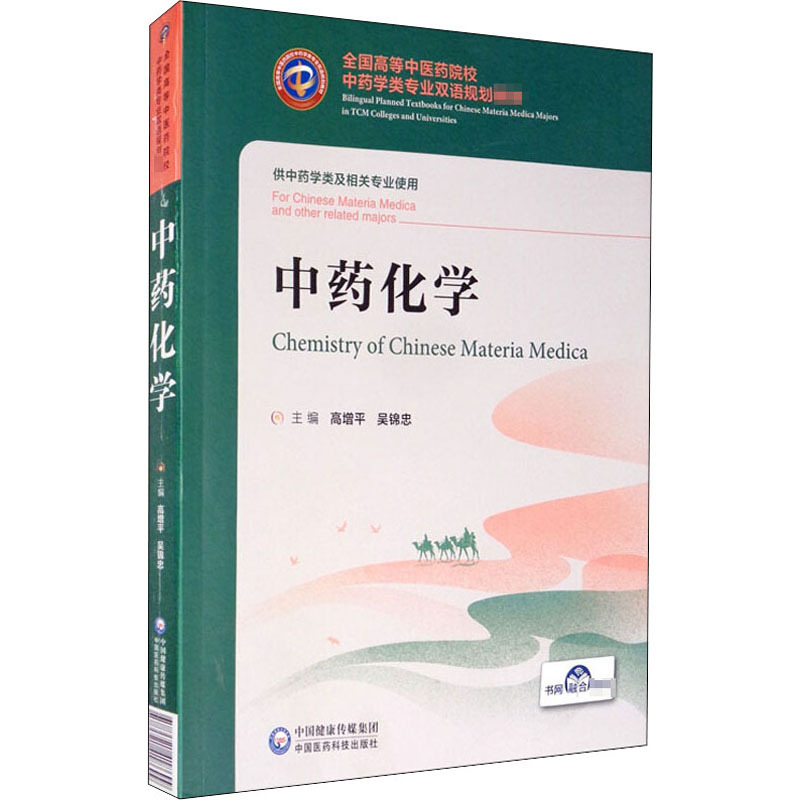
本书是全国高等中医药院校中药学专业双语规划教材,根据本学科教学大纲的基本要求和课程特点编写而成。体现高等院校中药学专业培养的特点,着力提高药学类专业学生的实践操作能力。坚持理论知识“必需、够用”为度。强调教材的针对性、实用性、条理性和优选性,既注重对学生基本技能的培养,又适当拓展知识面,实现职业教育与终身学习的对接,为学生后续发展奠定必要的基础。本书供中药学类专业师生使用。










评论晒单