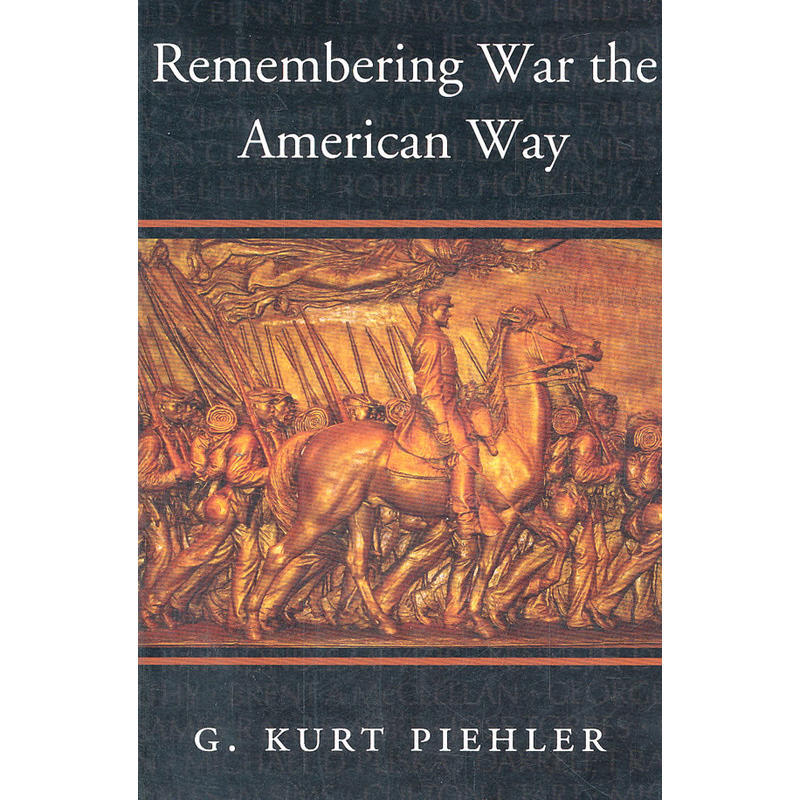
Wars do not fully end when the shooting stops. As G. KurtPiehler reveals in this book, after every conflict from theRevolution to the Persian Gulf War, Americans have argued about howand for what deeds and heroes wars should be remembered.
Drawing on sources ranging from government documents toEmbalmer"s Monthly, Piehler recounts efforts to commemorate wars byerecting monuments, designating holidays, forming veterans"organizations, and establishing national cemetaries. The federalgovernment, he contends, initially sidestepped funding formemorials, thereby leaving the determination of how and whom tohonor in the hands of those with ready money—and those whoresponded to them. In one instance, monuments to “Yankee heroes”erected by the Daughters of the American Revolution were counteredby immigrant groups, who added such figures as Casimir Pulaski andThaddeus Kosciusko to the record of the war. Piehler argues thatthe conflict between these groups is emblematic of the ongoingreinterpretation of wars by majority and minority groups, and bysuccessive generations.
Demonstrating that the battles over the Vietnam Veterans Memorialare not unique in American history, Remembering War the AmericanWay reveals that the memory of war is intrinsically bound to thepluralistic definition of national identity.








评论晒单